
Let’s face it—when most people hear “family meeting,” they picture one of two things:
- A parent lecturing while kids zone out
- Chaos, interruptions, and zero follow-through
But when done right, family meetings are one of the most powerful tools for building trust, communication, and responsibility. They don’t need to feel like boardroom check-ins. In fact, research shows that routines that are playful and inclusive are more likely to stick.
The Science: What Makes Meetings Work
According to Harvard’s Center on the Developing Child, children build key life skills—like planning, communication, and self-control—through consistent and supported experiences. Family meetings provide a perfect structure to practice those skills in a safe, connected environment.
Even in corporate settings, psychological safety is one of the top predictors of high-functioning teams. Your family is your most important team – so your meeting should feel safe, supportive, and maybe even silly.
How to Make Family Meetings Fun
1. Add Rituals Kids Look Forward To
Start with a consistent ritual to signal that it’s time to meet. Try:
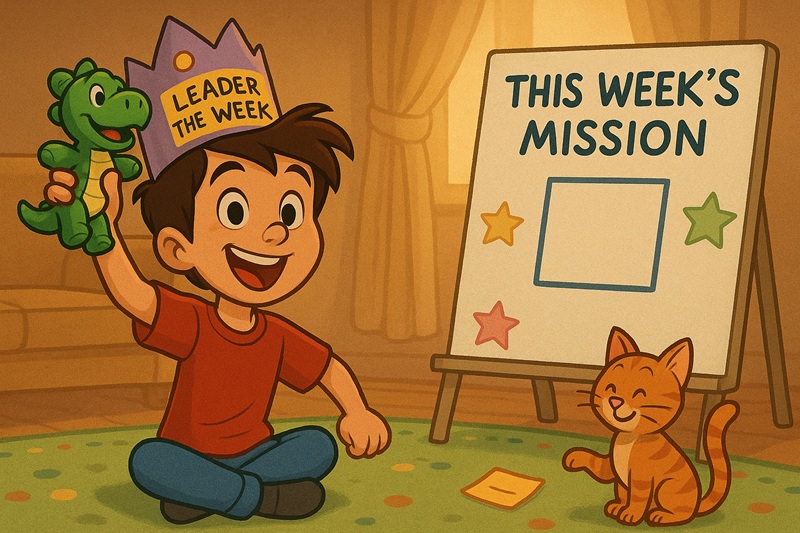
- Passing around a “talking object” (like a plush toy or silly hat)
- Opening with a joke or family cheer
- Playing a theme song as you gather
Rituals create predictability and give kids a sense of ownership.
2. Keep It Short and Sweet (15-20 Minutes)
The ideal weekly meeting has just 3 parts:
- Celebrate wins – “What went well this week?”
- Choose a focus – Pick one shared goal or priority
- Plan one action – Each person commits to a small step
Remove all distractions so everyone can listen and share!
3. Let Kids Help Run the Meeting
The more agency kids have, the more they engage. Let them:
- Take turns leading (In agile terms: this is the “scrum master”)
- Write or draw on sticky notes
- Ring a “start” or “wrap-up” bell
This builds leadership skills and reduces power struggles.
4. Make It Visual
Use a whiteboard, sticky notes, or apps like Grovi to make goals and plans visible. Let younger kids (ages 5-7) doodle or draw their own action steps. Visuals help reinforce progress and keep the vibe playful, not pressuring.
5. End with Connection
The goal is not just alignment – it’s bonding.
Wrap each meeting with:
- A shared snack or mini reward
- A round of compliments (“I liked how you…”, “I appreciate when you…”)
- A high five
These endings build positive emotion and make everyone excited about the week.
What the Science Says
- Predictable rituals build emotional safety (Harvard)
- Visual and active engagement boosts memory and buy-in
- Shared leadership fosters autonomy and competence
- Positive emotion increases habit formation (BJ Fogg Behavior Model)
Grovi Tip: Try Our Built-In Family Meeting Template
Not sure where to start? The Grovi app includes a guided “Plan the Week” meeting flow, complete with prompts, goal suggestions, and celebration ideas. Designed for busy families who want structure without the stress.
TL;DR
Family meetings don’t have to be formal or forced. With a few tweaks, they can become your favorite 15 minutes of the week:
- Keep it short
- Celebrate progress
- Let kids lead
- Make it visual and fun
- End with something everyone enjoys
The result? A stronger, more connected family – and kids who learn to lead themselves.