
As parents, we want our kids to grow up confident, capable, and ready to handle life’s challenges. But between busy mornings and bedtime battles, it’s tempting to just do things for them.
The good news? Fostering independence doesn’t require a parenting overhaul. It starts with small habits – and a bit of consistency.
Here are 7 easy, research-backed ways to build independence in your kids, organized by age so you can start where it makes sense for your family.
1. Let Them Choose
Suggested Age: 5+
Let your child pick one small, achievable goal each week – like “make my own breakfast twice” or “walk the dog without being asked.” Giving them a say builds autonomy and motivation, a key ingredient in Self-Determination Theory.
Tip: Use Grovi’s QuickStart Missions to help spark ideas!
2. Use Visual Timers Instead of Verbal Reminders
Suggested Age: 3 – 10
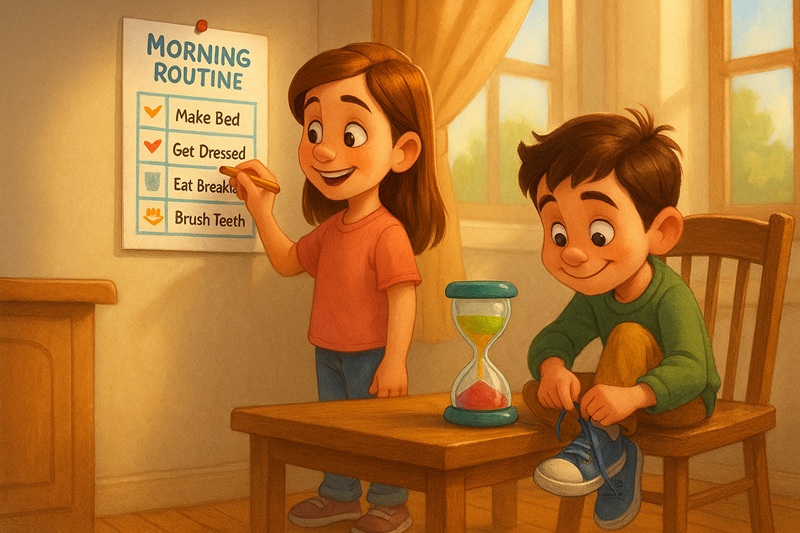
Replace nagging with visual countdowns (e.g., sand timers, apps, or a kitchen timer). These cues help younger kids manage transitions more smoothly, and build internal time awareness over time.
According to Harvard’s Center on the Developing Child, external supports like these promote long-term executive function growth.
3. Give Ownership Over a Simple Routine
Suggested Age: 4+
Assign one daily responsibility that’s theirs alone—like feeding the pet, packing their bag, or laying out clothes. Even if it’s done imperfectly, ownership builds confidence and creates natural structure.
Bonus: Use a visual chart or sticker system to reinforce consistency.
4. Ask, “What’s Your Plan?”
Suggested Age: 6+
Instead of jumping in with instructions, ask open-ended questions that promote self-direction:
- “What’s your plan for getting ready this morning?”
- “How will you remember to pack your water bottle?”
This language fosters problem-solving and forward thinking—core parts of independence.
5. Create a Visible Checklist (That They Update)
Suggested Age: 5–12
Turn routines into checklists – on paper, magnets, or dry-erase boards. Let them mark off completed tasks. That feeling of progress builds intrinsic motivation (and reduces reminders).
Younger kids benefit from picture-based lists; older kids can write their own.
6. Hold a Weekly Mini Check-In
Suggested Age: 6+
Set aside 5 minutes to reflect together. Ask:
- “What went well this week?”
- “What do you want to do differently next week?”
This helps your child develop self-awareness, set intentions, and celebrate growth. (It’s also built into Grovi’s weekly rhythm for easy habit-building.)
7. Let Them Struggle (Just a Little)
Suggested Age: 4+
Whether it’s zipping a coat or finding their math sheet, let your child try – even if it takes longer or isn’t perfect. Offer support (“I believe you can figure it out”), but don’t rush to rescue.
This “productive struggle” is essential to resilience, according to growth mindset research.
TL;DR: Small Habits, Big Growth
Start with one habit this week:
- Let them choose a goal
- Use visual timers
- Assign a routine they own
- Ask “What’s your plan?”
- Try checklists
- Do mini check-ins
- Give space for effort
Over time, these small shifts lead to stronger habits – and more independent, confident kids.
🛠 Want Help Getting Started?
The Grovi app makes weekly goal-setting and check-ins simple, collaborative, and even fun. Try a QuickStart goal or create your own. The more you use it, the more your family grows together.